
Choosing the wood you will use for a project is very important, if the piece has too many cracks in it then your project will fall apart as you progress, if there is any rot and you do not position it correctly in the piece then the rot will interfere with the detail in your project. It is important to plan you project out often a sketch or picture of the item you are carving helps you to plan the use of your wood to maximize the size and place any cracks that may occur in the correct position so that the project is not affected by the wood defects, on occasion I will take plasticine and make a model of my project so that I can plan my cuts to make certain that my project will not run out of wood before it is done
Things to consider when choosing your wood
Size
The size of your finished project determines the size of your raw material, give yourself lots of extra material, remember you can always remove wood but you cant put it back.
Weight
The weight is always a good thing to be mindful of, if you are planning to ship your project somewhere then a lighter wood is better, if the project is going to remain local then heavy wood is a better choice.
Defects
Defects are something you will have to learn to live with, sometimes they will add beauty to your project and other times they will stop you in your tracks, defects can be worked into p project of you plan correctly
Green VS dry wood
Dry wood is often the best wood to carve, the defects are usually visible in a dry piece of wood and therefore can be avoided, but a green piece of wood is easy to work with because it is soft and easy to work with your tools
Wood color and grain
Some wood is nicer to look at than other wood fine grain wood sands different than coarse grain wood, it also looks different after treating, Pine sometimes Has a green Stain in the grain that can look good in a project or could look bad depending on what you are looking to achieve
Solid piece no cracks
At least 48 inches long
At least 15 inches in diameter
Green wood or dry wood is fine
Pine, Fir, or Cedar are preferred
You can see the finished shape if there is a defect in the wood make sure that it will not impact your finished shape
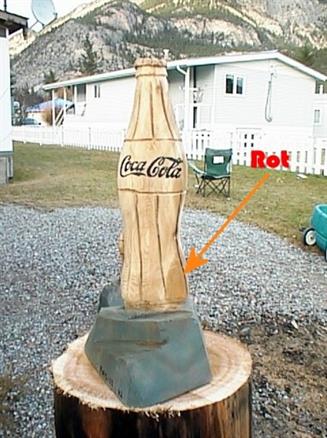
This bottle was done with cedar and weighs around ten pounds, notice the small amount of rot in the bottom right corner, if I had planned this project better the bottle contour would have not intersected the rotten spot, it would have been safely inside the shape I have carved, it would still have been there but would have been invisible.
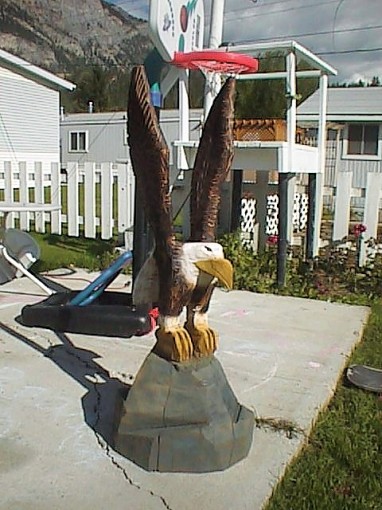
Later on you will be going through a step by step lesson on how to carve a bald eagle landing on a rock, follow the guidelines below to choose your wood
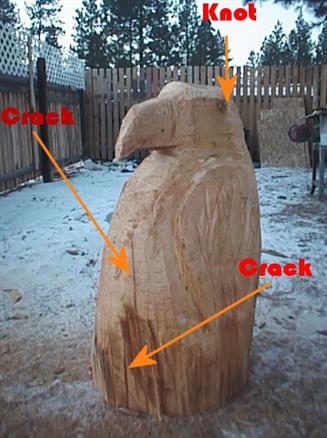
This eagle bust weighs around ninety pounds, fir was the wood of choice here, there are cracks in this bird but none of them interfere with the project because of the shape, there is even a large patch of rot in the base making it somewhat hollow. so you see that defects are not always a problem.
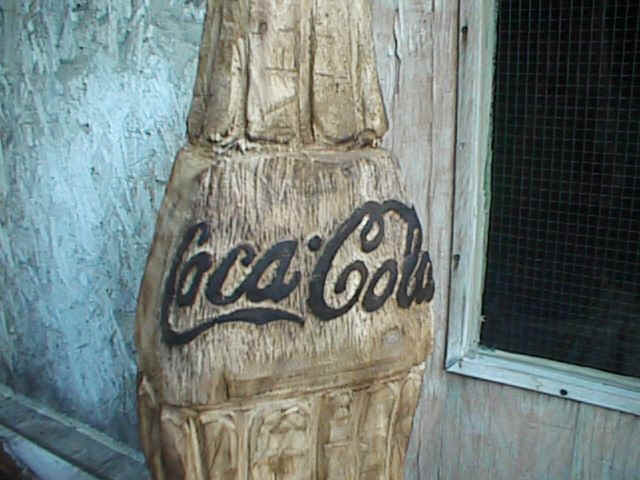
Detail work done with care to avoid any cracks or rot.
Wood types to choose for carving